
Our Blogs

How Contract Management Services Reduce Legal and Financial Risks?

Let’s start with something simple. Imagine signing a contract and feeling completely confident about it. Everything looks fine, the terms seem clear, and you move ahead without thinking twice. Now fast forward a few months. A payment issue comes up. Or a clause you barely noticed suddenly becomes a problem. Sound familiar? This happens more often than people admit. Contracts have this strange way of hiding problems in plain sight. They look harmless at first, but the real issues show up later, usually when it is too late to fix them easily. And honestly, most businesses do not have the time to go through every single line with a microscope. That is where contract risk management and contract management services step in. They are not just about reviewing documents. They are about protecting your business from risks you did not even know existed. In this article, we will talk about how contract management services actually reduce legal and financial risks. No complicated explanations. Just a real, practical breakdown of how it works and why it matters. Understanding Legal and Financial Risks in Contracts What Legal Risks Really Look Like? Legal risks are not always dramatic or obvious. Sometimes, they come from something as small as unclear wording. A clause that can be interpreted in two different ways is already a problem waiting to happen. For example, imagine a contract that says a service will be delivered “within a reasonable time.” What does that even mean? One party might think it is a week. The other might assume a month. And just like that, a disagreement begins. Legal risks also come from non-compliance. If a contract does not align with regulations, the business could face penalties or legal action. That is not something any company wants to deal with. Financial Risks Are Just as Tricky Financial risks tend to show up quietly. Hidden fees, unclear pricing terms, or penalties buried deep in the document can affect profitability. Then there are missed deadlines. A contract renews automatically, and suddenly the business is locked into another year of payments it did not plan for. These are not rare situations. They happen all the time. Why These Risks Go Unnoticed? The truth is, contracts are often long and complex. People skim through them, focusing only on the big points. Smaller details get ignored. On top of that, many businesses still rely on manual processes. Contracts are stored in folders, emails, or shared drives. There is no single system keeping everything organized. So things slip through the cracks. What Is Contract Risk Management and Why Does It Matter? Contract risk management is basically the process of identifying potential risks in contracts and finding ways to reduce them. It is about asking one question over and over again. What could go wrong here? The main goal is to spot risks early. Not after a problem happens, but before it even begins. It also focuses on assessing how serious those risks are. Some might be minor. Others could have a big impact on the business. And then comes mitigation. Taking steps to reduce or eliminate those risks. When contract risk management is done properly, businesses avoid unnecessary losses. They also reduce the chances of legal disputes. It creates a sense of control. Instead of reacting to problems, businesses stay ahead of them. How Contract Management Services Reduce Legal Risks? One of the biggest reasons legal issues happen is inconsistency. Different contracts use different language, and that creates confusion. Contract management services solve this by using standard templates. This ensures that agreements are clear and consistent. This is where things get interesting. Instead of looking at a contract as one big document, it is broken down into smaller parts. Each clause is reviewed carefully. For example, liability clauses are checked to make sure they are fair. Termination clauses are reviewed to ensure they are practical. This level of detail helps catch risks that might otherwise go unnoticed. Regulations change all the time. Keeping up with them is not easy. Contract management services make sure contracts align with current legal requirements. This reduces the chances of penalties and legal trouble. When contracts are stored in one centralized system, it becomes easier to track them. Businesses can quickly see what agreements are active, what needs attention, and what might pose a risk. How Contract Management Services Reduce Financial Risks? Financial risks often come from unclear terms. Contract management services analyze these terms carefully. They check pricing structures, payment schedules, and penalties. This helps businesses understand exactly what they are committing to. Sometimes, costs are not obvious at first. A clause might include additional fees under certain conditions. Without proper review, these details can be missed. By identifying them early, businesses can avoid unexpected expenses. Deadlines are easy to forget when there are too many contracts to handle. Contract management systems track important dates and send reminders. This ensures that businesses do not miss renewals or deadlines. When contracts are well structured, both parties understand their responsibilities clearly. This reduces misunderstandings and improves financial stability. Role of Contract Due Diligence Services in Risk Reduction Contract due diligence services involve reviewing contracts in detail to uncover risks and obligations. It is like taking a closer look before making an important decision. During mergers and acquisitions, due diligence becomes even more important. Businesses need to review all existing contracts to identify liabilities. For example, a company might have long term commitments that affect its value. Without proper review, these issues might go unnoticed. Due diligence provides clarity. It helps businesses understand what they are getting into before they make a decision. And that makes a huge difference. Clause Level Contract Risk Review: Why Details Matter? Instead of reading a contract as a whole, each clause is reviewed individually. This makes it easier to identify specific risks. Payment terms often create confusion if they are not clearly defined. Liability clauses can shift responsibility in unexpected ways. Termination conditions may limit flexibility. Each of

Read More

What Are Contract Management Services? A Complete Guide for Businesses

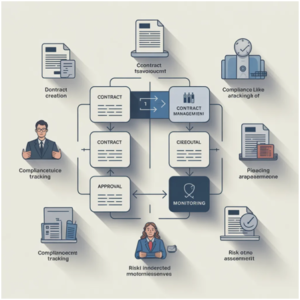
Let me ask you something. When was the last time you actually reviewed all your business contracts properly? Not just signing them and moving on, but really going back and understanding what is written inside. Most businesses do not do this, and honestly, it is not because they are careless. It usually comes down to one simple reason. There are just too many contracts and not enough time to manage them properly. Think about how businesses operate today. Every vendor agreement, employee contract, partnership deal, and client agreement carries some level of responsibility. At first, things feel manageable. But as the business grows, contracts start piling up quietly in the background. Then one day, something small gets missed. Maybe a renewal deadline passes, or a clause gets overlooked. Suddenly, a simple agreement turns into a problem that could have been avoided. This is exactly why contract management services are becoming essential. They are not just about storing documents or keeping things organized. They help businesses stay in control, reduce risks, and avoid unnecessary stress. In this guide, we will break everything down in a way that feels practical and easy to follow. No complicated legal language. Just real insights that actually help. What Are Contract Management Services? At a basic level, contract management services involve managing the entire lifecycle of a contract. This includes creating agreements, reviewing them, storing them securely, tracking important dates, and eventually renewing or closing them. But in reality, it goes much deeper than that. Every contract represents a commitment between two parties. When those commitments are not tracked properly, things begin to fall apart. Deadlines get missed, payments get delayed, and responsibilities become unclear. Over time, this creates confusion and increases the chances of disputes. Contract management services bring structure into this process. They make sure that every agreement is clear, accessible, and actively managed instead of being forgotten after signing. Why Businesses Need Contract Management Services? Most businesses underestimate how quickly contracts accumulate. In the early stages, everything feels under control. There are only a few agreements to handle, and tracking them seems easy. But as operations expand, the number of contracts grows rapidly. Without a proper system in place, it becomes difficult to keep track of what is active, what is expiring, and what needs attention. Contracts can look simple on the surface, but the real details are often buried deep within the document. Payment terms, penalties, and obligations are not always obvious at first glance. Missing even a small detail can lead to financial loss or legal complications. This is where contract risk management plays a critical role. It helps businesses identify potential issues before they turn into real problems. If you have ever spent time searching for the latest version of a contract, you already know how frustrating it can be. Teams often end up going back and forth, trying to confirm which document is correct. This slows down decision making and affects productivity. A structured system eliminates this confusion and saves valuable time. Regulations are becoming stricter across industries. Businesses are expected to follow legal and compliance requirements more carefully than ever before. Without proper systems, staying compliant becomes challenging. Contract management services help ensure that agreements align with current regulations and reduce the risk of penalties. Key Components of Contract Management Services Everything begins with a well written contract. A clear and structured agreement sets expectations and reduces the chances of misunderstandings later. Many businesses now rely on standard templates to maintain consistency. This approach not only saves time but also ensures that important clauses are not accidentally left out. Contracts usually need to be reviewed by multiple teams. Legal, finance, and operations often have their own requirements. Without a clear process, approvals can get delayed, and deals may take longer to finalize. A structured workflow keeps everything organized and ensures that contracts move smoothly from one stage to the next. Keeping contracts organized is essential. Document management services provide a centralized system where all agreements are stored securely. This makes it easier to find, update, and share documents whenever needed. It also reduces the risk of using outdated versions. Signing a contract is just the beginning. Businesses need to monitor deadlines, deliverables, and obligations throughout the contract lifecycle. Missing a key date can lead to penalties or missed opportunities. Tracking systems ensure that nothing slips through the cracks. Many contracts renew automatically if no action is taken. Without proper tracking, businesses may continue agreements they no longer need. On the other hand, they might miss opportunities to renew valuable partnerships. Managing renewals and closures properly helps maintain control over business relationships. Understanding Contract Risk Management Contract risk management focuses on identifying and reducing potential risks within agreements. It is about being proactive instead of reactive. Rather than dealing with problems after they occur, businesses aim to prevent them from happening in the first place. Financial risks often come from unclear pricing or unexpected costs. Legal risks arise when contracts contain vague or incomplete clauses. Operational risks occur when one party fails to meet its obligations. Each of these risks can impact the business in different ways. Identifying risks requires careful review and attention to detail. Businesses look for unclear language, missing clauses, or terms that seem unbalanced. Even something that appears minor can become significant over time. Using standardized contracts helps reduce confusion and inconsistencies. Automation tools can track important details and send reminders for deadlines. Regular reviews ensure that contracts remain accurate and relevant. Contract Due Diligence Services Explained Contract due diligence involves analyzing agreements in detail to understand risks and obligations. It is especially important during major business decisions such as mergers, acquisitions, or partnerships. Imagine acquiring a company only to discover hidden liabilities in its contracts later. That situation can change everything. Due diligence helps businesses uncover these risks before making decisions, allowing them to proceed with confidence. Experts review contracts, identify risks, and map out obligations. This process may take time, but it

Read More

How to Apply for Re-Evaluation of AAI Height Clearance?

The type of infrastructure development around the airports is highly controlled in order to guarantee the safety of the airplane operations. Height clearance by the Airports Authority of India (AAI) is one of the most crucial permissions needed in buildings that are close to the airports. Developers, architects, and property owners must obtain this clearance before constructing any structure that could interfere with flight paths, often with the support of an Re-Evaluation of AAI Height Clearance to ensure accuracy and compliance. Nevertheless, in some cases, the applicants might think that reconsideration of the clearance decision taken by AAI is necessary. Under these situations, a re-evaluation application may be made so as to review the height limit or the denial of the application. The knowledge of the procedure of requesting re-evaluation can assist the property owners in clarifying their concerns and ensuring that the aviation regulations are followed. This guide describes the application procedure of the re-evaluation of AAI height clearance, the circumstances in which it might be necessitated, and the procedures that are followed in the application. Knowledge in AAI Height Clearance The Height clearance by the Airports Authority of India is a compulsory permission for buildings within the nearby airports in India. The clearance will make sure that the construction does not contravene the height limits that are allowed with regard to aviation safety standards. Some of the parameters that are used by the authority to determine proposed structures are: These parameters can be used to ascertain whether the proposed structure is dangerous to the aircraft during its takeoff or landing. To avoid errors and delays, many developers work with an aviation height clearance consultant in India who ensures accurate documentation and compliance with aviation regulations. Why Re-Evaluation of Height Clearance May Be Needed The reasons why an applicant can seek a re-assessment of the decision of the decision-making body can be listed. Wrong Data/Documentation The original application can sometimes be in use with the wrong site coordinates, survey information, or elevation. The results of these errors may result in the wrong measurement of building height. Updated Design Plans It is the developers who can amend their architectural plans to make buildings shorter or use adjustments in their designs to comply with aviation specifications. Technical Misinterpretation In some exceptional circumstances, the applicants would think that the height limit used by the authorities might not be entirely accurate, considering the actual state of the conditions of the site. New Supporting Evidence The applicants can request further reports of surveys or technical tests, which can be used to justify their reconsideration request. In that case, a re-evaluation request has to be filed. Eligibility for AAI Height Clearance Re-Evaluation Applicants are supposed to ensure that they have met the eligibility requirements before filing a re-evaluation application. In most cases, re-evaluation is admitted when: By seeking the services of a seasoned building height NOC consultant in India, it is possible to know whether it is the correct move to reassess before making any actual move. Documents Required for Re-Evaluation To request reconsideration of height clearance, applicants must submit relevant documentation supporting their claim. Commonly required documents include: Accurate documentation is essential because aviation authorities rely heavily on technical data during the review process. Step-by-Step Guide to Apply to Re-evaluation The re-evaluation process is a well-structured procedure that should be carried out by the applicants. The initial action is to critically examine the initial decision by the Airports Authority of India regarding the height clearance. Knowing the compositions or causes of the restriction or rejection will aid in better preparation of the re-evaluation request to the applicants. There might be a need to put up a new site survey in order to confirm coordinates, elevation, and neighboring structures. The sophisticated tools that surveyors normally employ include GPS mapping and geospatial analysis in an effort to give precise measurements. These are the modified reports that are building the argument of reconsideration. In case of the height limit because of aviation safety limitations, the architects can change the building to lower the height or change the structures. This will make sure that the proposed construction adheres to obstacle-limiting surfaces and aviation regulations. The applicants should make a formal request for the reason why they should be re-evaluated. In the application, it must be clear that: When a well-documented submission is produced, more chances are gained in this regard. Re-evaluation applications are normally lodged with the online NOC application portal, which is controlled by the Airports Authority of India. The portal will enable the applicants to submit supporting documents and provide a tracking system for their requests. The applicants should make sure that all files are uploaded in the necessary format and that the items in the applications are copied to the one submitted. After that is submitted, the aviation authorities go through another technical review. At this phase, professionals investigate: The analysis will make sure that the updated proposal does not present a threat to aircraft activities. The authority will either give out one of the following results after conducting a re-evaluation request: The decision will be made available to the applicants via the official portal or channels. Challenges During Re-Evaluation While the re-evaluation process can help correct errors or update decisions, applicants may face certain challenges. Technical Complexity Aviation height clearance regulations involve complex calculations related to flight paths and obstacle limitation surfaces. Documentation Errors Missing or incorrect documentation may delay the review process. Longer Processing Time Re-evaluation requests require detailed analysis, which can increase processing time. Working with experts familiar with aviation regulations can simplify the process and improve application accuracy. Significance of Professionally Directed Advice Communication of aviation clearance procedures may be very tricky when developers are not conversant with regulatory structures. The professional consultants help in: Complyn are the organizations that assist the property developers in managing complex aviation clearance procedures. Having mastered the expertise on matters that relate to regulatory compliance, firms like this assist customers during the application processes

Read More
obstacle-limitation-surfaces

What is an AAI NOC for Building Height Clearance in India?

Towering upward, India’s growing cities now face tighter rules when building close to runways. Near airport zones, height limits come into play fast – guided by aviation safety needs. One of the most important approvals required for such projects is the AAI NOC for building height clearance. The green signal from authorities means buildings stay within safe elevation bounds. Flying low or landing high – each move counts when structures climb, too. Around airports, the Airports Authority of India sets height rules for buildings. Before putting up a structure taller than allowed, permission is required. If builders skip this step, trouble can follow – legal blocks, holdups, or being told to tear it down. A developer might need clear heights under AAI rules just as much as a landowner does – missteps here slow everything down. Architects often find their plans adjusted when these limits aren’t considered early on. Clearances matter because unchecked details lead to delays no one wants. AAI NOC And Building Height Rules A green light from the Airports Authority of India – this is what an AAI NOC really means. Buildings rising near flight paths need this nod before any work begins. Without it, structures in these controlled air zones can’t move forward. Approval comes only after checks ensure nothing interferes with aircraft movement. So, progress waits until the certificate shows up. Airports require clear airspace for aircraft to take off, land, and maneuver safely. To maintain this safety, aviation authorities define imaginary surfaces around airports known as Obstacle Limitation Surfaces (OLS). Structures must stay below these zones depending on how far they are from where jets roll. Tall things beyond those limits might block paths meant for safe flying. A structure that exceeds these boundaries could interfere with planes taking off or landing. So permission for its height needs approval prior to any work beginning. Many developers work with a height clearance consultant India to understand whether their project falls within the regulated zones and to prepare the necessary documentation. AAI Height Clearance Required Air traffic approval helps keep flights safe while meeting legal rules. Sometimes it acts like a checkpoint, making sure everything follows set guidelines. Near runways, just one extra floor might alter where planes fly. For that reason, officials who manage air traffic review each new blueprint – only then comes permission. The key reasons why AAI height clearance is required include: Starting off ahead on approvals means work moves forward, free from holdups tied to rules. Clearance sorted at the front keeps momentum going when it counts. Places Requiring Minimum Vertical Space Far from just near runways, structures might still need AAI approval. When heights go beyond set levels, distance matters less – kilometers away could still count. Several factors determine whether a building requires aviation clearance, including: With so much math involved, plenty of builders turn to India’s airport height advisory teams early in the planning stage. Structures Needing AAI NOC Approval Not every build needs approval, yet tall structures often must check airspace rules set by India’s airport regulators. Some developments rise high enough to interfere with flight paths, so oversight kicks in early. When cranes reach certain levels, officials review plans before work continues. Projects near runways face stricter checks than those farther out. Even temporary equipment sometimes falls under these limits. Approval depends on the location, plus how skyward it climbs. Common examples include: A crane might have to follow height rules even though it is only there for a short time. Sometimes these tall machines fit under limits just because of how they’re placed on site. Rules can apply no matter if the structure stays forever or not. Even when meant to be moved later, certain setups still count under local codes. Steps to Get AAI NOC Getting approval for vertical space happens online, using a system that checks various technical details one after another. What begins as a request turns into a series of automated validations before anything gets confirmed. Each step measures different physical factors, feeding results back into the network. Clearance only comes when every piece fits within set limits. Decisions emerge from data, not people, moving silently behind screens. Before applying, developers must gather important project details such as: Exactly where something sits on Earth really matters since elevation numbers come straight from spot-on location details. Applications for height clearance are submitted through the NOCAS (No Objection Certificate Application System) portal managed by the Airports Authority of India. A space online lets people add their plans, sketches, along with extra files, so others can check them. Flying a drone begins after officials check every detail. Not just rules, but how it fits the sky matters too. Because safety comes first, each plan gets studied closely. Instead of rushing, they look at timing and location together. When questions pop up, answers must be clear. Even small details affect approval chances. So long as risks stay low, progress moves forward. Once it meets flight safety standards, the request moves forward for clearance. After successful evaluation, AAI issues a No Objection Certificate specifying the maximum permissible height for the building. Developers must ensure that the final construction does not exceed the approved height limit. Professional Height Clearance Consultants Role Flying rules plus math for space above ground often confuse people. Experts step in, untangle the mess, making it easier while cutting down mistakes. Usually, you’ll find help like this: available guidance covers these areas: In addition to these services, Complyn Advisory Services conducts technical assessments such as AGA (Aeronautical Ground Aids) calculations and CNS (Communication, Navigation, and Surveillance) analysis. These evaluations help determine the maximum permissible height a proposed construction can achieve at a specific location. By performing these calculations before the application is filed, builders and developers can understand the possible height they may receive for their project in advance. This allows them to plan their building design within permissible limits and avoid costly redesigns or delays later in the approval process. With

Read More