

If you are planning a construction project in Mumbai or Navi Mumbai, understanding the AAI NOC process in Mumbai is one of the most critical regulatory steps you need to take before breaking ground. The Airports Authority of India (AAI) requires a No Objection Certificate for any structure whose proposed height falls within the protected airspace surrounding a licensed aerodrome. In a dense urban environment like Mumbai, where the Chhatrapati Shivaji Maharaj International Airport (CSIA) and the upcoming Navi Mumbai International Airport (NMIA) create overlapping influence zones, airport height clearance in Mumbai applies to a far wider range of projects than most developers initially expect.
This guide walks you through every stage of the NOC process: what the approval is, why it is required, what AAI NOC documents required must be compiled, how long the process takes, and what you can do to avoid the most common mistakes that delay or derail approvals.
Table of Contents
Introduction to AAI NOC for Building Height Clearance
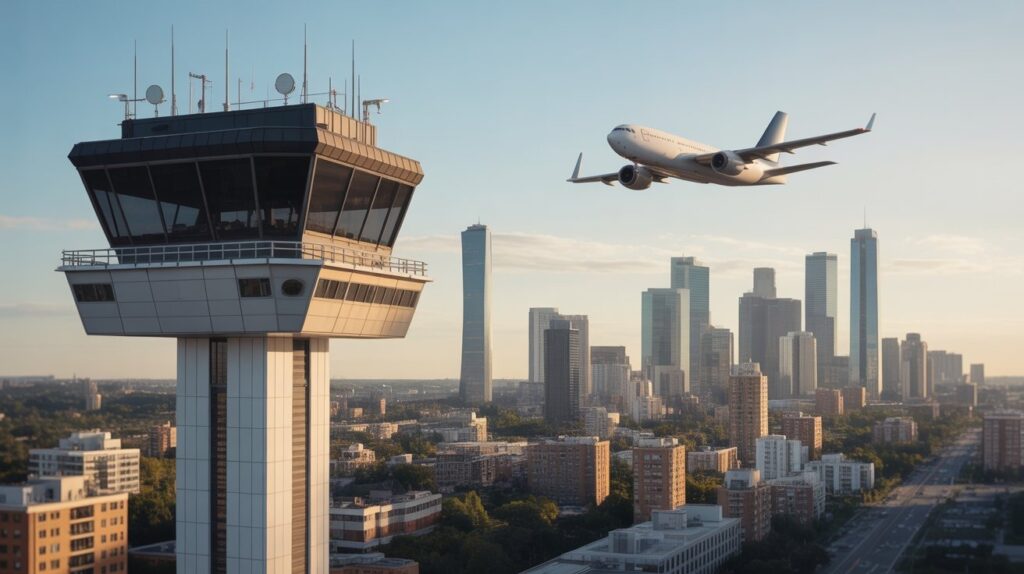
An AAI NOC (No Objection Certificate) for building height is a formal approval issued by the Airports Authority of India confirming that a proposed structure does not violate the Obstacle Limitation Surface (OLS) of a nearby aerodrome. The OLS is a three-dimensional protected airspace envelope defined around every licensed airport in India. Any construction that rises into this envelope without clearance constitutes an aviation safety hazard and is prohibited under the Aircraft Act 1934 and the Aircraft Rules 1937.
Applications for airport height clearance in Mumbai are processed through NOCAS (NOC Application System), the Airports Authority of India’s online portal for height clearance applications. NOCAS handles all civil aerodrome NOC applications in India and is the mandatory channel for building height NOC in Mumbai for structures near CSIA, the upcoming NMIA, and any other licensed civil aerodrome in the Mumbai region. A separate process governed by the Ministry of Defence applies to any structure near a military aerodrome.
Why AAI NOC Is Required in Mumbai and Navi Mumbai
Mumbai’s geography and airport infrastructure make height clearance a routine necessity for a large share of construction projects. CSIA is surrounded by dense high-rise development in areas including Andheri, Vile Parle, Kurla, and Santacruz. The airport’s approach and take-off paths extend outward across large parts of the city, creating height restrictions that affect developments well beyond the immediately visible airport boundary.
In Navi Mumbai, the picture is further complicated by the NMIA under development near Panvel. Height clearance requirements for the NMIA have shifted over time as airport planning has progressed. AAI has specified that structures above 55.10 m AMSL in the NMIA influence zone require formal NOC through NOCAS. Areas including Ulwe, Dronagiri, Kharghar, Belapur, Taloja, and Panvel all fall within zones where airport height clearance in Mumbai or the adjacent Navi Mumbai jurisdiction applies.
The Colour Coded Zoning Map (CCZM) published by AAI for Mumbai and Navi Mumbai defines permissible height thresholds by zone. Projects within those zones whose proposed heights exceed the CCZM limits must apply for a formal NOC before any construction or vertical extension can proceed.
Documents Required for AAI NOC in Mumbai
Submitting a complete and accurate set of documents is the single most effective way to prevent your NOC application from being returned or rejected. The standard AAI NOC documents required for a building height clearance application through NOCAS are:
| Sr. No. | Required Documents / Information |
|---|---|
| 1 | GPS-verified site coordinates in WGS84 decimal degrees format (latitude and longitude of the proposed structure) |
| 2 | Height of the proposed structure both Above Mean Sea Level (AMSL) and Above Ground Level (AGL), including all rooftop elements such as water tanks, AC units, lift machine rooms, and antennae |
| 3 | Structural drawings showing building elevation, floor layout, and the highest point of the structure with all appurtenances marked |
| 4 | Land ownership or lease documents confirming the applicant’s legal right over the site (registered sale deed, lease agreement, or equivalent) |
| 5 | Local authority building plan approval or application reference number from MCGM, CIDCO, NAINA, or the relevant municipal body |
| 6 | Applicant identity and entity documents: company incorporation certificate and authorised signatory letter, or individual identity and address proof |
| 7 | Undertaking declaring that construction will not commence before the NOC is received, as required under AAI’s NOCAS submission conditions |
| 8 | Site location map showing the site in relation to the nearest aerodrome reference point, clearly indicating distances and orientation |
For projects near the NMIA site in Navi Mumbai, an AMSL certificate from an authorised survey agency registered with CIDCO may additionally be required to verify coordinate and height data. Working with an experienced AAI NOC process Mumbai consultant helps ensure that every document meets AAI’s technical formatting and accuracy standards before submission.
Step-by-Step AAI NOC Approval Process in Mumbai
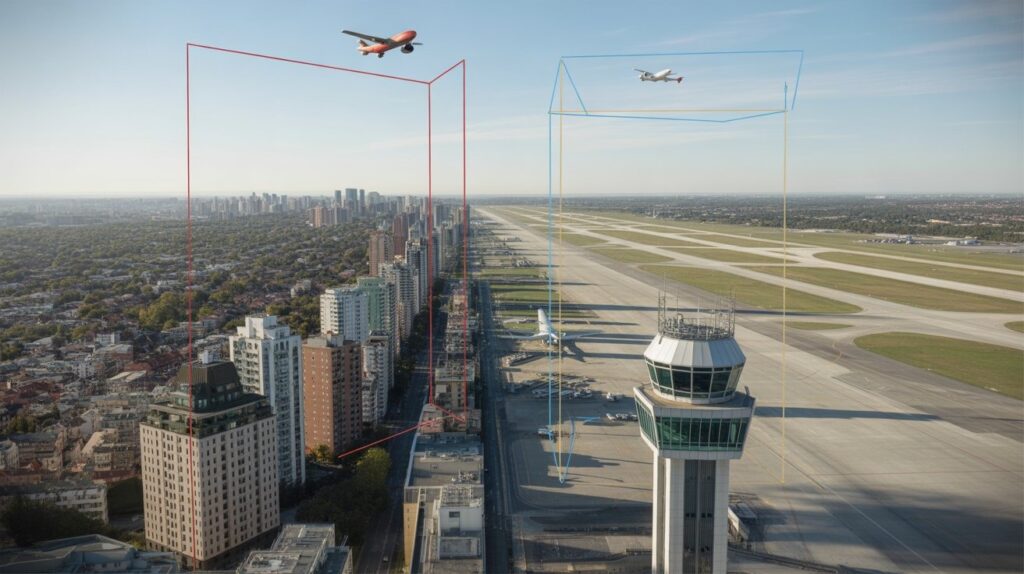
The AAI NOC process in Mumbai follows a defined sequence of steps. Understanding each stage helps project teams plan timelines and prepare documents without last-minute corrections.
- Confirm whether NOC is required: Check the CCZM published for Mumbai and Navi Mumbai on the NOCAS portal to determine whether your proposed structure height exceeds the permitted threshold for your zone. If it does, NOC is mandatory.
- Commission a GPS survey: Engage a qualified surveyor to produce WGS84-format coordinates for the site and all corners of the proposed structure. Height data must be expressed in AMSL. For Navi Mumbai projects, use an agency registered with CIDCO for AAI survey purposes.
- Prepare all required documents: Compile the full set of AAI NOC documents required as listed in the previous section. Verify that structural drawings are current, that the AMSL value reflects all rooftop additions, and that land documents are registered and valid.
- Register on the NOCAS portal: Visit nocas2.aai.aero and register as an applicant. Complete all mandatory profile fields accurately. Errors at the registration stage can cause delays in the review queue.
- File the NOC application: Select the correct structure type, complete the online application form, upload all documents in the required file formats, and submit. A NOC ID is generated on successful submission. Print and retain this for tracking.
- Respond to technical queries: AAI’s technical team will review the submission against the OLS for CSIA and NMIA. Queries requesting clarification or additional information may be raised. Responding promptly and accurately is critical to keeping the application on track.
- Receive the NOC or decision: If the application is approved, the NOC is issued digitally through the NOCAS portal with a specified validity period. If refused, the reasons are communicated in writing. A revised submission or a formal appeal may be filed in response to a refusal.
- File an appeal if needed: Where the approved height is below project requirements, or where the NOC has been refused, a formal appeal supported by an aeronautical study can be submitted to AAI’s appellate authority for reconsideration.
AAI NOC Timeline Explained
The timeline for the AAI NOC process in Mumbai depends on the completeness of the submission, the complexity of the project, and whether any queries are raised by the AAI technical review team. The table below provides a realistic estimate of each stage:
| Stage | Activity | Typical Duration |
|---|---|---|
| 1 | Pre-application feasibility check and CCZM review | 2 to 5 days |
| 2 | GPS survey and AMSL computation | 3 to 7 days |
| 3 | Document preparation and compilation | 5 to 10 days |
| 4 | NOCAS registration and application filing | 1 to 2 days |
| 5 | AAI technical review and query phase | 15 to 45 days |
| 6 | NOC issuance (if no further queries) | 30 to 90 days total |
| 7 | Appeal and aeronautical study (if required) | 60 to 120 days additional |
Projects that submit complete, accurate documentation with GPS-verified coordinates and correct AMSL data consistently move through the review phase faster. Projects with incomplete submissions, incorrect height data, or missing land documents tend to attract multiple rounds of queries that significantly extend the total timeline.
Common Reasons for NOC Rejection or Delay

Understanding why applications are rejected helps project teams avoid the most preventable failures in the AAI NOC process in Mumbai:
- Coordinates not in WGS84 format: Submitting coordinates derived from maps, town survey records, or CAD drawings instead of GPS-verified WGS84 decimal degree values is the leading cause of technical deficiency notices
- AMSL height not provided: AAI evaluates structures against AMSL-based OLS data; applications that state height only in AGL terms without AMSL conversion are returned for correction
- Rooftop elements omitted: Water tanks, lift machine rooms, cooling towers, antennae, and solar panel mounting structures must be included in the declared maximum height; omitting them leads to amended applications after site inspection
- Incomplete or unregistered land documents: Informal ownership records, unsigned lease agreements, or documents under dispute cannot support a valid NOC application
- Wrong structure type selected on portal: NOCAS has separate application workflows for different structure types including residential buildings, chimneys, telecom masts, and cranes; selecting the wrong category causes processing errors
- Structure height penetrates OLS: Where the proposed height genuinely intrudes into the protected airspace envelope, NOC will be refused unless the applicant files a formal appeal with an aeronautical study demonstrating safety compatibility
- Delayed query responses: Applications where queries from AAI remain unanswered beyond the review window can be closed or deprioritised, requiring resubmission
Tips to Avoid Delays in Your AAI NOC Approval
Project teams that approach the building height NOC in Mumbai process proactively and methodically consistently achieve faster, smoother approvals. The most effective practical steps are:
- Begin the CCZM check and feasibility assessment at the earliest stage of project planning, before architectural drawings are finalised, so that any height constraints can be designed around rather than retrofitted
- Commission a GPS survey by a qualified surveyor as a dedicated project activity, not as an afterthought to be completed during document compilation
- Calculate and verify AMSL height independently before submitting; cross-check the figure against the site’s known ground elevation using AAI’s portal mapping tool
- Include every rooftop element in the declared maximum height from the outset; it is always better to declare a higher figure and receive approval for it than to have the NOC revised after a site inspection
- Ensure all land documents are registered and in the applicant’s name before filing; unregistered or informally executed documents will not satisfy AAI’s ownership verification requirement
- Monitor the NOCAS portal regularly after submission and respond to AAI queries within 48 to 72 hours; prompt responses keep the application active and in the review queue
- For projects in Navi Mumbai, verify the current NMIA-specific height thresholds against the most recently published CCZM version before filing, as these have changed multiple times as airport construction has advanced
Role of AAI NOC Consultants in Mumbai
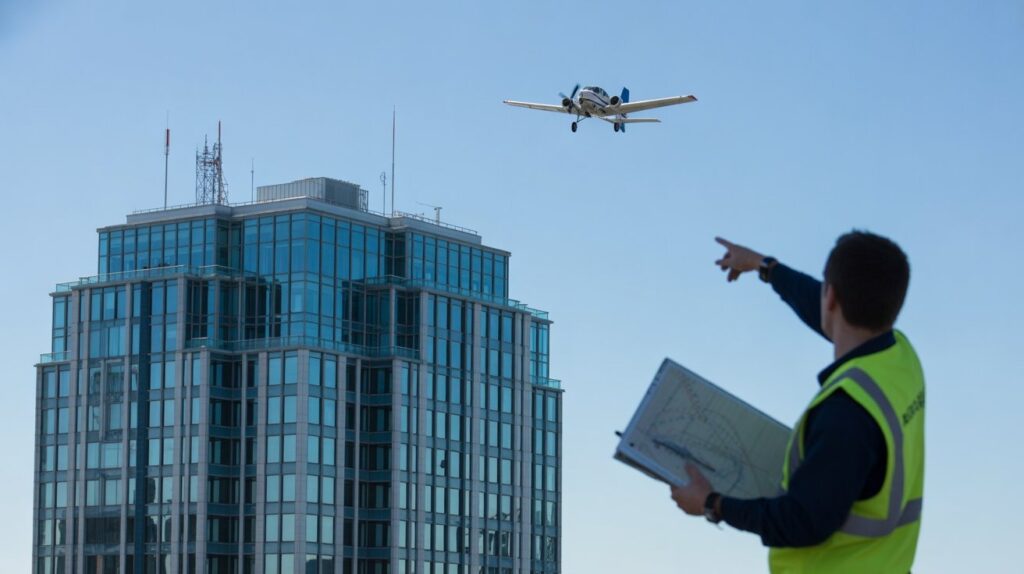
The technical nature of the AAI NOC process in Mumbai and the document precision it demands make professional consulting support a practical advantage for most project owners. An experienced DGCA clearance Mumbai and AAI NOC consultant for Building Height Clearance in Mumbai brings capabilities that are genuinely difficult to replicate without specialist training.
Consultants who work regularly on building height NOC in Mumbai applications understand how to prepare GPS-verified, AMSL-accurate submissions that meet AAI’s technical standards from the first filing. They are familiar with the NOCAS portal’s query management workflow and the documentation formatting requirements that the technical review team expects. This institutional knowledge translates directly into fewer queries, faster progression through the review stages, and lower rates of rejection or revision.
For projects where the NOC is refused or the approved height falls short of what the design requires, consultants experienced in appeal filing and aeronautical study coordination can navigate the reconsideration process effectively. In the context of Navi Mumbai, where DGCA clearance Mumbai and NMIA-related height regulations have evolved rapidly, having a consultant with current awareness of AAI’s position on permissible heights by zone is particularly valuable.
For professional, end-to-end support with your AAI NOC process in Mumbai, reach out to Complyn Advisory Services, a regulatory advisory firm providing complete NOCAS filing, documentation, and appeal assistance for building and infrastructure projects across Mumbai and Navi Mumbai.
| Need Help with Your AAI NOC in Mumbai? From NOCAS filing and document preparation to appeal support, our team manages every step of your building height clearance approval. Consult Complyn Advisory Services Today! |
Frequently Asked Questions
Who needs to apply for AAI NOC in Mumbai?
Any developer or builder whose proposed structure exceeds the permissible height defined in the CCZM for Mumbai or Navi Mumbai must apply for airport height clearance in Mumbai through the NOCAS portal before commencing construction.
What documents are required for the AAI NOC application?
The core AAI NOC documents required include GPS-verified WGS84 coordinates, AMSL and AGL height data, building elevation drawings, registered land documents, local authority approval references, applicant identity documents, and a signed undertaking not to commence construction before NOC receipt.
How long does the AAI NOC process take in Mumbai?
The AAI NOC process in Mumbai typically takes 30 to 90 days from a complete, accurate submission through NOCAS, with faster processing for applications that require no query rounds and longer timelines for those requiring queries, site inspection, or appeal.
Can the AAI NOC be refused even if MCGM or CIDCO approved the building plan?
Yes; building height NOC in Mumbai from AAI is a separate regulatory approval from local authority building plan sanction; a project can be refused AAI height clearance regardless of municipal or CIDCO approval if the proposed height intrudes into the airport’s Obstacle Limitation Surface.
What can be done if the AAI NOC is refused or the approved height is less than required?
A formal appeal supported by an aeronautical study can be filed with AAI’s appellate authority; an experienced airport NOC consultant can manage this process and seek reconsideration for higher DGCA clearance in Mumbai and AAI-approved heights where the safety assessment supports the request.
Conclusion
Navigating the AAI NOC process in Mumbai requires a clear understanding of what triggers the requirement, what documents must be prepared, how the NOCAS portal works, and what the realistic approval timeline looks like. For developers and builders operating in Mumbai and Navi Mumbai, where the influence zones of CSIA and NMIA touch a large share of active construction areas, early engagement with the process is not optional. It is the difference between a project that proceeds on schedule and one that faces costly regulatory delays.
Whether your project is a residential tower in Thane, a commercial development in BKC, or an infrastructure facility in Panvel, professional guidance through the AAI NOC process in Mumbai pays for itself in time saved and rejections avoided. Contact Complyn Advisory Services for end-to-end support on NOCAS filing, document preparation, and airport height clearance in Mumbai approval.